

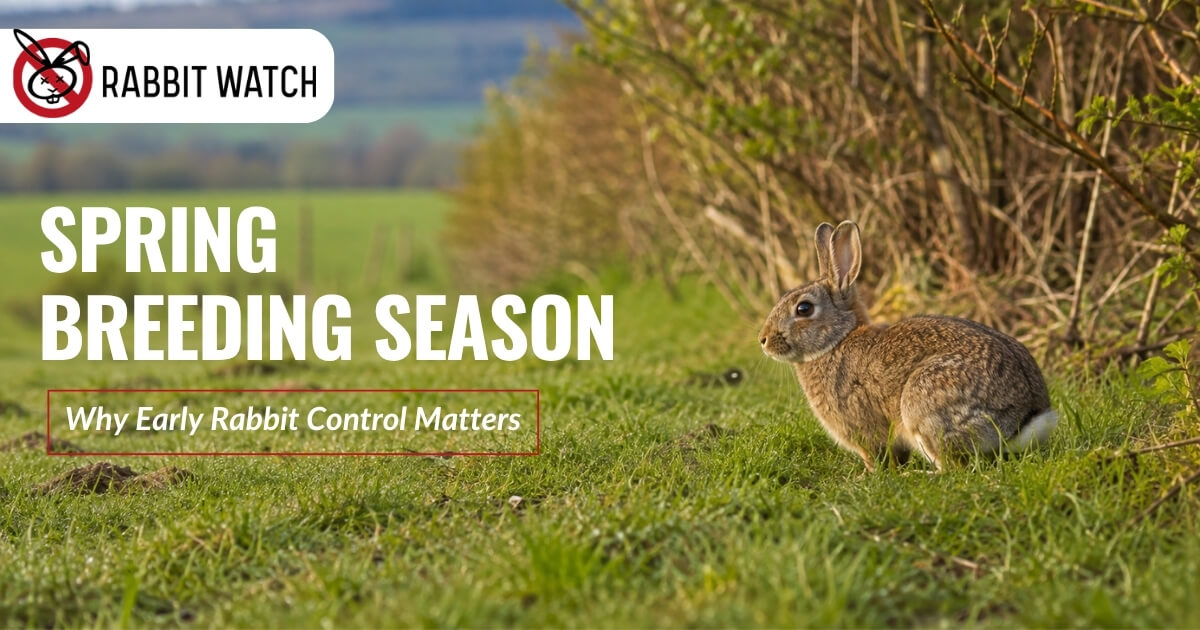
Spring brings longer days, warmer temperatures and fresh pasture growth. It can also mark the beginning of a rapid increase in rabbit activity.
As food becomes more readily available, rabbits enter their main breeding season. A small population that appears manageable at the end of winter can quickly become a much larger problem, increasing grazing pressure and damage to pasture, crops, gardens, young plantings and native vegetation.
Early intervention gives landowners the best opportunity to act before rabbit numbers, and the cost and complexity of controlling them, begin to climb.
Why rabbit numbers can increase so quickly
Rabbits have a very high reproductive capacity. Female rabbits can breed repeatedly when food and environmental conditions are favourable, and young females born early in the season may begin breeding within the same year.
The Department of Conservation notes that an adult female may produce a total of 20 to 50 young and may be pregnant for much of the year. This allows rabbit populations to recover rapidly after natural population declines or incomplete control.
Spring conditions can support this growth by providing:
- Increased pasture and vegetation growth
- More reliable food supplies
- Additional shelter for young rabbits
- Favourable conditions for breeding and survival
This means the rabbits seen above ground may represent only part of the population occupying an area.
Why waiting can make control more difficult
When rabbit numbers are low, there are fewer animals to target and active areas can be easier to identify. Once breeding is well underway, several generations may be present and rabbits may spread into neighbouring pasture, shelter belts, gardens or newly planted areas.
Waiting until damage becomes severe can result in:
- More rabbits requiring control
- Greater pasture and crop losses
- Increased pressure on young trees and native plantings
- More extensive burrow systems
- Greater soil disturbance and erosion risk
- Higher control and follow-up costs
Early action is not simply about removing the rabbits currently visible. It is about reducing the breeding population before it has the opportunity to multiply.
Signs of increasing rabbit activity
Regular monitoring is especially important from late winter into spring. Walk the property and look for changes around known feeding and shelter areas.
Common signs include:
- Fresh droppings concentrated in particular locations
- Closely grazed or cropped pasture
- Scratching or digging
- Fresh soil around burrow entrances
- Damage to seedlings, young trees and garden plants
- Chewed bark or stems
- Well-used tracks between feeding and shelter areas
- Rabbits appearing regularly around dawn or dusk
Pay particular attention to sunny banks, fence lines, shelter belts, sheds, scrub, rock piles and the edges of short pasture. Rabbits often remain close to reliable shelter and feeding areas.
Monitor before choosing a control method
A simple property inspection can help establish where rabbits are active and whether the population appears to be increasing.
Consider:
- Marking active burrows and feeding areas on a property map.
- Photographing damage so it can be compared over time.
- Recording where and when rabbits are seen.
- Checking the same locations at dawn or dusk.
- Speaking with neighbours about activity on adjoining land.
This information can help a landowner or rabbit control contractor select an appropriate method and concentrate control where it is most likely to be effective.
Match the control method to the situation
Rabbit control is rarely a one-size-fits-all exercise. The most appropriate approach will depend on the size and terrain of the property, rabbit density, available shelter, proximity to houses and roads, the presence of livestock or pets, and local regulatory requirements.
Control options may include:
- Shooting
- Trapping
- Fumigation of suitable burrows
- Toxic baiting
- Warren or harbour destruction
- Exclusion fencing and protection of vulnerable plants
Timing matters. For example, poisoning is generally more effective when alternative food is limited and rabbits are more likely to take bait. Research commissioned by Otago Regional Council identifies spring through to early summer as the main breeding period and notes that winter is often the preferred time for poisoning because rabbit populations and natural food availability are generally lower.
If the ideal winter control window has passed, do not assume that nothing can be done. Spring is still an important time to assess the population, seek professional advice and establish a coordinated control and follow-up plan.
A rabbit control contractor or regional council pest management team can help determine which methods are suitable for your property and the time of year.
Always follow product labels, legal requirements and safety precautions. Some control methods and products may require trained or approved users.
Follow-up is essential
One control operation may reduce rabbit numbers, but it may not remove every rabbit. Survivors can continue breeding, while rabbits from surrounding properties may move back into the treated area.
After control work:
- Recheck previously active locations.
- Look for fresh droppings, digging or grazing damage.
- Record any remaining rabbit sightings.
- Arrange follow-up control where required.
- Remove or reduce rabbit harbour where practical.
- Protect vulnerable plantings while rabbit pressure remains.
The goal should be sustained management rather than a single short-term reduction.
Work with neighbouring landowners
Rabbits do not recognise property boundaries. Control on one property may have only a temporary effect if surrounding areas continue to support a large population.
Coordinating with neighbours can:
- Cover a larger connected area
- Reduce reinvasion
- Improve the efficiency of control
- Allow contractors to plan work more effectively
- Support longer-lasting results
If rabbits are moving between properties, a coordinated approach is often more effective than treating each property separately.
Spring action checklist
Before rabbit numbers increase further:
- Walk the property and check known problem areas.
- Photograph and record fresh signs.
- Identify active feeding, shelter and burrow areas.
- Check young plantings, crops and pasture edges for damage.
- Talk with neighbouring landowners.
- Contact a rabbit control contractor if needed.
- Check regional council requirements and current public notices.
- Plan follow-up monitoring after any control work.
Act before a small problem becomes a large one
Spring growth can make rabbit activity less obvious for a time, but it also provides the conditions that allow populations to expand.
Monitoring now and responding to early warning signs can help reduce breeding pressure, protect vulnerable land and vegetation, and avoid a more difficult control problem later in the season.
The earlier increasing rabbit activity is identified, the more options landowners are likely to have.
For advice specific to your property, contact your regional council’s biosecurity or pest management team, or speak with an experienced rabbit control contractor.