
Rabbit Control Guide

Practical advice, shared knowledge, and control information to help New Zealand landowners manage wild rabbits.

rw-rabbit-management-post

Managing and Monitoring Rabbits in New Zealand

A Practical Guide for Farmers and Landowners Rabbit control is not a one-off job. Long-term success comes from consistent monitoring, early intervention, and combining multiple control methods throughout the year. For New Zealand farmers, orchardists, lifestyle block owners, and rural land managers, ongoing rabbit management is essential…

rw-rabbit-baiting-post

Rabbit Baiting in NZ: A Guide for Farmers & Landowners

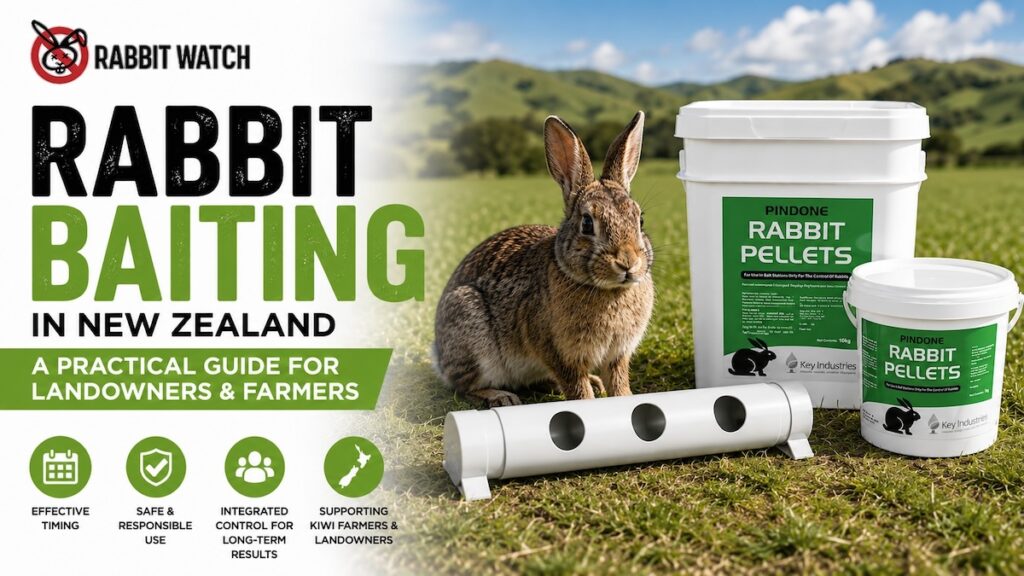
Rabbits remain one of New Zealand’s most damaging pest animals, impacting pasture production, crops, native vegetation, and farm profitability. For many rural properties, lifestyle blocks, and peri-urban areas, baiting with Pindone remains one of the most effective tools for reducing rabbit numbers when used correctly as part…

rw-identify-problems-post

Identify Rabbit Problems Early on NZ Farms

Identify the Problem: Rabbit Damage on New Zealand Farms Rabbits can cause major problems for New Zealand farmers, especially in dry regions, hill country, lifestyle blocks, orchards, vineyards, and cropping areas. The first step in effective rabbit control is correctly identifying the scale of the problem before…

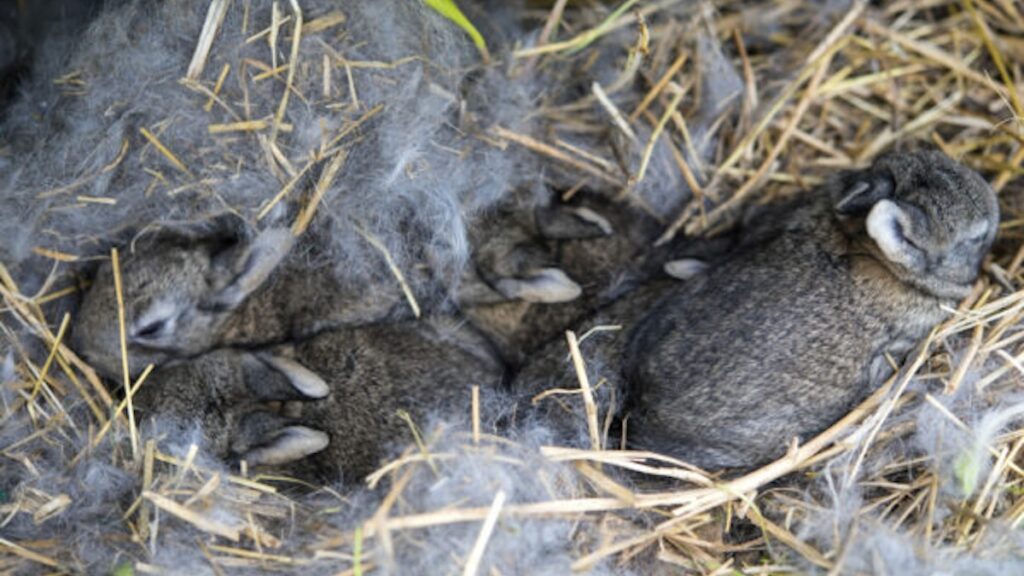
A group of newborn rabbits on a farm

Practical Rabbit Control Methods for Rural New Zealand

Control Methods for Rabbits in New Zealand Wild rabbits continue to be one of the most damaging pest problems for New Zealand farmers. High rabbit numbers can reduce pasture growth, damage crops, increase erosion, and place ongoing pressure on farm productivity. Successful rabbit control is rarely achieved…

How to use Pindone Rabbit Bait for Results

The following steps are critical if you are wanting a successful baiting program on your property. Share this information with your neighbours otherwise you might find their rabbits moving in once you have eradicated your fluffle of bunnies. Pindone Rabbit Bait must only be used in a…

Rabbit population management

Rabbit population management We are going to outline to you how to really make an impact on your rabbit population so we can win the war on this common enemy. One of the key words there is common, you really are going to need all your neighbours…

Trapping with Snares

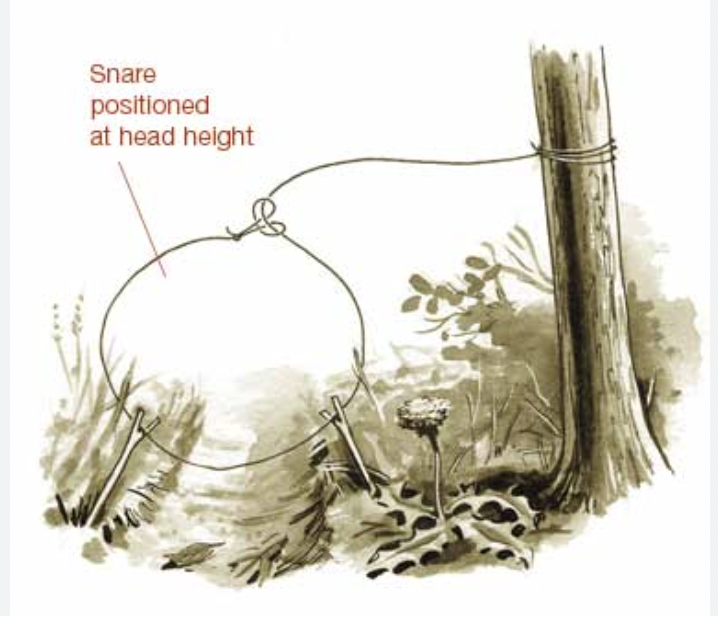
Traditionally simple snares are made of wire or cord, though other materials can be used including plant and animal fibres, and placed along existing animal travel routes, or along the anticipated path of travel an animal may use when approaching bait or other attractant. A traditional snare…

Controlled Substance License

CSL is designed for people who carry out pest control and border control using extremely toxic substances called VTA (Vertebrate Toxic Agents) or extremely toxic gases called Fumigants. WorkSafe control the registration process for all persons who work with Cyanide, DRC1339, PAPP and Sodium fluoroacetate for controlling…

Pindone Training Certificate

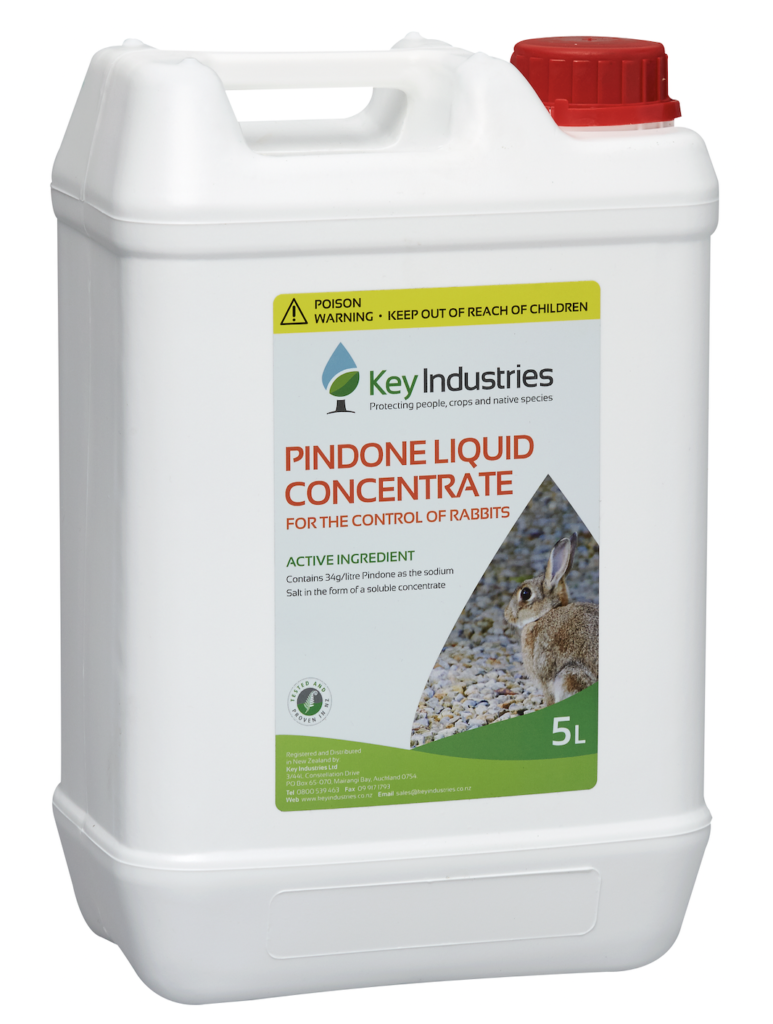
This course is for people applying Pindone pellets broadcast and Pindone Liquid baited carrots to control rabbits. Pindone is not a Controlled Substance Licence (CSL) product because it is not a 6.1A, 6.1B Classification Vertebrate Toxic Agent (VTA) neither does it require a Certified Handlers Certificate. HSW:HS…

Thermal telescope & GPS mapping

Rabbit counts will be conducted at night using a thermal telescope. Due to the safety issues that arise from operating on steep and rugged terrain at night we will be using mostly static counts. The thermal telescopes enable accurate counting over areas up to 5 -6 hectare…

Otago Regional Pest Management Plan feral rabbit rules

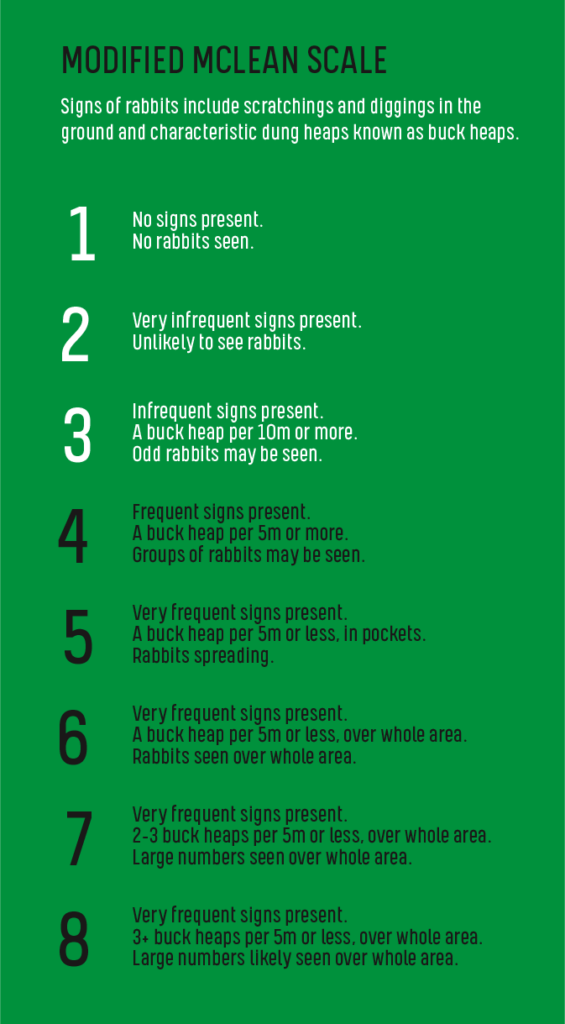
Plan Rule 6.4.6.1 An occupier within the Otago region shall control feral rabbit densities on the land they occupy to at or below Level 3 on the Modified McLean Scale. Plan Rule 6.4.6.2 Note: This is designated a good neighbour rule An occupier within the Otago region shall,…

Protecting plants from rabbits

To Protect or not to protect? Plant guards or tree protectors placed around newly planted native seedlings are sometimes used to provide protection from wind on exposed sites or during hot dry months, and reduce browsing by animals such as rabbits and hares. Selection and use of…

Guest posts

If you are interested in providing a guest post for the Rabbit Watch website, please get in touch.

Scroll to Top