

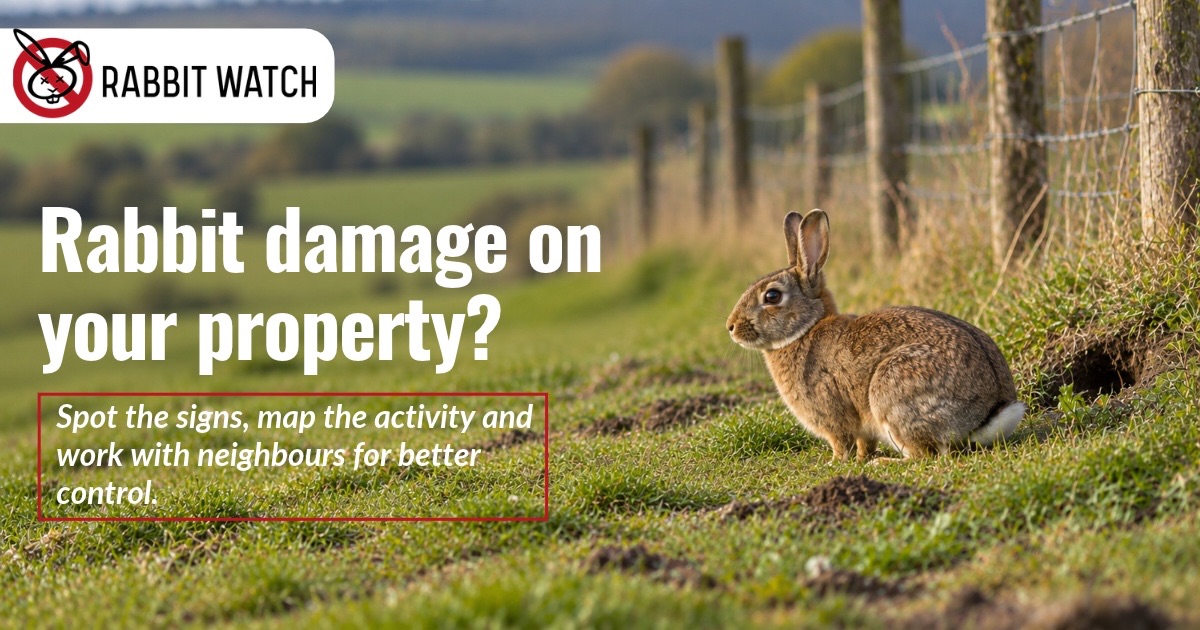
A patch of pasture that never seems to recover. Young plants repeatedly grazed back. Fresh digging along a fence line.
Rabbit damage can become an ongoing frustration for farmers, lifestyle block owners and gardeners. Rabbits compete with livestock for pasture, damage vulnerable native vegetation, and disturb erosion-prone ground through burrowing and scraping.
Understanding where damage is happening is a useful first step towards managing it. A simple property map, a record of changes and a conversation with your neighbours can help turn scattered observations into a practical plan.
Look for several signs together
Poor plant growth or bare ground alone does not confirm that rabbits are responsible. Look for damage alongside evidence of recent rabbit activity:
- Fresh scratchings: patches of newly disturbed soil.
- Fresh droppings: often darker and shinier than older pellets.
- Active burrows: reopened entrances or newly dug holes.
- Grazed vegetation: plants or crops showing recent feeding damage.
These are among the signs Otago Regional Council identifies when checking whether rabbits are re-establishing after control.
Take photographs and note the date and location. If you are unsure what is causing the damage, share your observations with a rabbit-control contractor or your regional council’s biosecurity team before choosing a response.
Create a simple property map
Your map does not need to be complicated. A printed aerial image, a hand-drawn plan or an annotated photograph can provide a useful starting point.
Mark the places where you have observed:
- Rabbits or fresh signs of activity.
- Burrow entrances and possible shelter.
- Damage to pasture, gardens or plantings.
- Gaps or digging around fences and gates.
- Previous control work.
Use different symbols for confirmed activity and areas that need another check. Add dates so you can see whether activity is spreading, returning or becoming concentrated in particular places.
Also mark practical details such as access points, buildings and areas used by stock or pets. Keeping this information together makes it easier to explain the situation when seeking advice.
Use your records to decide where to start
Rather than treating every sighting as a separate problem, look at the pattern across your property.
Is damage concentrated around one planting area? Are fresh signs appearing along a shared boundary? Have rabbits returned to somewhere that was treated previously?
Choose a few locations to check regularly. Photograph them from the same position and record what you see. Note sightings, fresh digging and new damage separately, rather than relying on memory.
These records give you a starting point for comparing conditions before and after control. They also help you explain which areas matter most to you, whether that is productive pasture, a vegetable garden or a native restoration planting.
Talk to neighbours about a shared approach
Rabbits do not recognise property boundaries. Control on one property can be undermined when rabbits remain established nearby.
Coordinating work does not mean every property needs exactly the same treatment. It means sharing information and planning compatible actions across the affected area.
A first conversation could cover:
- Where each neighbour is seeing activity and damage.
- Whether the same boundary or shelter areas are involved.
- Who is interested in obtaining advice or a contractor quote.
- Access arrangements and concerns about pets, stock or wildlife.
- How everyone will check for returning activity.
There are practical examples of this approach in New Zealand. In Moeraki, Otago Regional Council reported that neighbouring landowners combined efforts, engaged the same contractor and shared costs. The community used fencing, initial control and follow-up work to help maintain the gains.
Start with a shared concern and a manageable next step. Comparing maps or arranging a joint site visit may be enough to get the conversation moving.
Include fencing and follow-up in the plan
A control programme needs to address both the rabbits already present and the risk of activity returning.
Otago Regional Council advises that well-maintained rabbit-netted fencing, including gates, can reduce reinvasion from neighbouring areas. It also recommends follow-up control to address remaining rabbits and maintain low numbers.
Walk your fence line and record places that need attention, especially gaps at gates, joins and the base of the fence. Ask your contractor how fencing and any suitable habitat changes could support the proposed work.
Agree on follow-up checks before control begins. Decide who will inspect the property, what they will record and when further advice will be sought if fresh activity appears.
Prepare before contacting a contractor
Bring your map, photographs and notes to the conversation. Explain the damage you want to reduce, your budget and any access constraints.
Ask the contractor to inspect the site and explain:
- The proposed initial treatment.
- What follow-up work will be needed.
- How results will be assessed.
- What can realistically be achieved with the fencing and access available.
The timing and methods should suit the property and local conditions. Check current regional council guidance and follow all applicable product instructions and requirements.
Share what you are seeing
A few dated photographs and a simple map can make your next rabbit-control conversation much more useful. Sharing observations with neighbours can help identify a wider problem and create opportunities to coordinate the response.
Where are rabbits causing the most damage on your property, and have you worked with neighbours to manage them?
Visit the Rabbit Watch Working With Neighbours forum to share your experience, ask a question or discuss a coordinated approach in your area.
Further information
Otago Regional Council: Rabbit management