

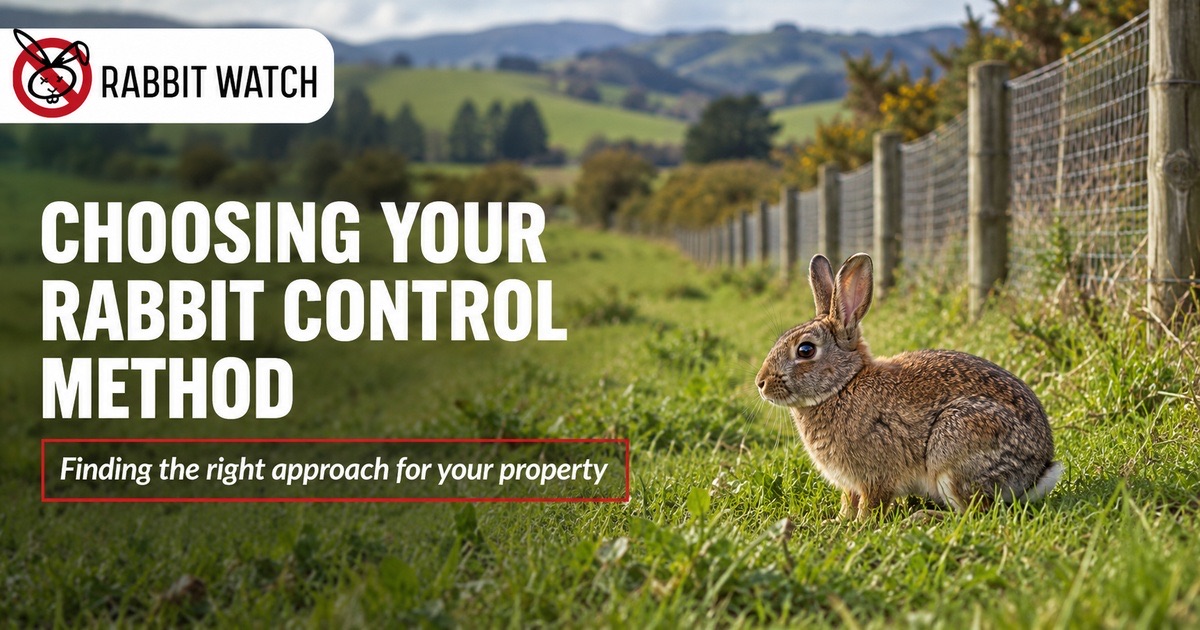
Comparing rabbit control methods for different properties
The rabbit control approach that suits a large farm may be quite different from one that works on a lifestyle block or beside a public reserve. Before choosing a method, look at the property, the rabbit problem and who else uses the land.
This November, take a little time to compare your options and plan the follow-up before work begins.
Start with your property
Walk around and note where you are seeing rabbits, fresh digging and damage. Bring your observations together on a simple map, along with boundaries, buildings, access points and areas used by children, pets or livestock.
Ask yourself what you need to achieve. Are you protecting a vegetable garden, reducing grazing pressure across paddocks or addressing activity around buildings? These are useful details to discuss with a contractor or your regional council’s biosecurity team.
Compare the options
Rabbit exclusion fencing can protect vulnerable areas and help reduce reinvasion. Its value depends on suitable construction and ongoing maintenance, including attention to gates and gaps. Include inspection and repairs in your plan.
Baiting may be considered where rabbit numbers need an initial reduction. Product choice, natural feed, site conditions and access all matter. Follow the current product label and applicable authorisation requirements. Discuss suitability and timing with a qualified contractor.
Shooting is commonly used for follow-up or maintaining low rabbit numbers. Nearby houses, roads and public access can restrict its suitability. Any proposed work needs an assessment by an appropriately qualified operator.
Warren fumigation targets rabbits in their burrows and may be considered as part of a wider programme. It depends on locating the warren entrances and requires specialist knowledge and compliance with product and qualification requirements.
Reducing shelter can also contribute. Wood piles, dense cover and spaces beneath sheds may provide harbourage. Consider what can be changed without harming valued vegetation or wildlife. Check for animals before closing access beneath structures.
Think about everyone using the land
A smaller property can present quite a complicated planning task. Children, pets, livestock, visitors and close neighbours all need to be considered, particularly where toxic products are proposed. A bait station does not remove the need to follow safety instructions.
On farms, reserves and adjoining blocks, discuss access and timing with the people involved. Ask how the proposed work fits with neighbouring properties and whether a shared approach is practical.
Ask about the whole programme
Before booking work, ask:
- Why does this method suit my property?
- What preparation and access arrangements are needed?
- What restrictions will apply, and for how long?
- What follow-up is included?
- How will we assess the result?
Agree on a review date and keep your original map and photographs for comparison. A clear record will make the next conversation more useful than relying on memory alone.
Share your experience
What most influences your choice of rabbit control method? Visit the Rabbit Watch Community Hub to share your property type and the challenges you are working around. You can also explore Find a Contractor when you need help assessing your options.
Visit https://rabbitwatch.org.nz/
General information only. Check current product labels, regional council guidance and applicable requirements before undertaking control work.
Sources
Otago Regional Council, Rabbit management: https://www.orc.govt.nz/environment/biosecurity-and-pests/animal-pests/rabbits/rabbit-management
Otago Regional Council, Community rabbit management programmes: https://www.orc.govt.nz/environment/biosecurity-and-pests/animal-pests/rabbits/community-rabbit-management-programmes
Otago Regional Council, Rabbits: https://www.orc.govt.nz/environment/biosecurity-and-pests/animal-pests/rabbits