

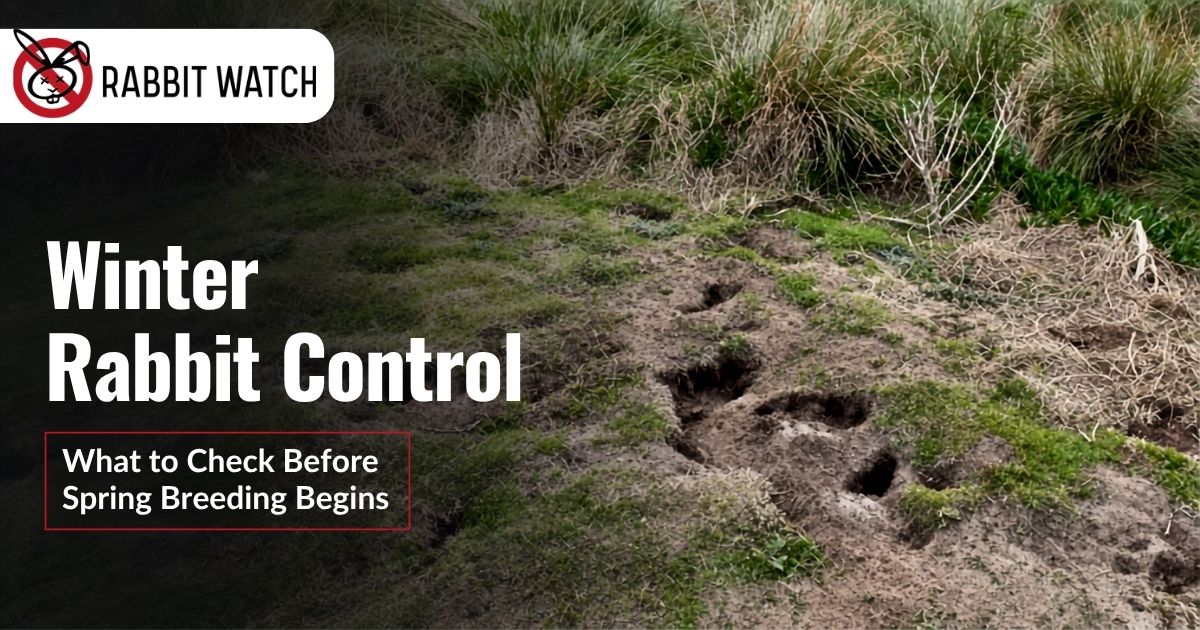
Winter is an important time to assess rabbit activity and prepare for the breeding season ahead. Although rabbit numbers may appear lower during the colder months, the signs they leave behind can reveal where populations are established and where problems may increase once spring conditions arrive.
Taking the time to inspect your property, record activity and plan an appropriate control programme now may help prevent a small rabbit problem from becoming much harder, and more expensive, to manage later.
Why check rabbit activity during winter?
Winter and early spring offer a useful opportunity to assess the breeding population before the main spring and early-summer breeding period.
Winter does not necessarily mean rabbits have disappeared. They may be less visible, remain closer to cover or change where they feed.
Otago Regional Council monitoring has traditionally taken place during winter and early spring because rabbit numbers are comparatively stable, providing an indication of the potential breeding population going into the main breeding season.
View Otago Regional Council rabbit-monitoring information
Walk the property and look for fresh signs
What to inspect
- Fence lines
- Shelterbelts
- Banks and terraces
- Scrub margins
- Creek beds and dry waterways
- Sheds and other structures
- Areas of short or recently grazed pasture
- Previously active warrens
- Boundaries shared with neighbouring properties
Signs to look for
- Fresh droppings
- Newly disturbed soil
- Open or recently used burrow entrances
- Tracks or well-used runs
- Closely grazed patches
- Damage to young plants or shelterbelts
- Rabbits seen at dawn or dusk
Remember that one visible rabbit or burrow may not show the full extent of the population.
Check old warrens – not only newly disturbed areas
Revisit previously controlled warrens and check for:
- Reopened entrances
- Fresh soil or footprints
- Droppings near the entrance
- Vegetation recently removed from around the opening
- New burrows appearing nearby
Record where activity is occurring
Make a simple property map or use your mobile phone to record:
- Active burrows and warrens
- Areas of grazing damage
- Dates and approximate numbers sighted
- Control previously undertaken
- Neighbouring areas from which rabbits may be returning
Repeating the same inspection route provides a more meaningful comparison than relying on occasional sightings.
Consider what is happening beyond your boundary
Rabbit control is rarely isolated to one property. Consider whether rabbits are moving from:
- Neighbouring land
- Road reserves
- River margins
- Council-administered land
- Forestry blocks
- Unmanaged sections or lifestyle properties
Coordinating control with neighbours can help reduce reinvasion after work has been completed.
Review previous control efforts
Consider the following questions:
- What method was previously used?
- When was it completed?
- Were warrens followed up afterward?
- Did rabbit numbers fall noticeably?
- Where has activity returned?
- Could untreated neighbouring land be contributing?
- Is another method or a professional assessment now needed?
Rabbit management generally requires monitoring and follow-up rather than a single treatment.
Choose the control method carefully
Rabbit-control methods may include:
- Shooting
- Trapping
- Baiting
- Fumigation
- Warren ripping or destruction
- An integrated programme using more than one method
The appropriate approach will depend on rabbit numbers, terrain, property use, livestock, pets, neighbouring properties and local requirements.
Always check the rules and notification requirements applying in your region before beginning rabbit control. Toxic baiting and some other control methods require careful planning and may need to be completed by an appropriately qualified contractor.
The Department of Conservation notes that rabbit-control approaches used in New Zealand include shooting, trapping, poisoning, gassing and burrow destruction.
Learn more about rabbit control from the Department of Conservation
Don’t wait until spring activity is obvious
By the time numerous young rabbits are visible, the population may already be expanding. Winter monitoring gives landowners time to:
- Understand the size and location of the problem
- Speak with neighbours
- Check local rules and notices
- Contact a rabbit-control contractor
- Select an appropriate control method
- Plan follow-up monitoring
Create a simple pre-spring action plan
- Walk the property and inspect likely harbourage areas
- Check known warrens for fresh activity
- Record sightings, droppings and damage
- Review the results of previous control work
- Talk to neighbouring landowners
- Check council information and local requirements
- Obtain professional advice if needed
- Schedule control and follow-up monitoring
Winter provides an opportunity to identify rabbit activity and prepare before spring breeding increases the pressure on pasture, crops and native vegetation.
A successful rabbit-control programme begins with understanding where rabbits are living, how they are using the property and where reinvasion may occur. Early assessment, coordinated planning and consistent follow-up can make control more manageable over the longer term.
Need help deciding what to do next?
Visit the Rabbit Watch contractor directory to find a rabbit-control professional operating in your area.
Join the discussion
What signs of rabbit activity are you seeing this winter?
Have you noticed fresh diggings, reopened warrens, grazing damage or increased rabbit sightings on your property? Share your region and what you are observing with the Rabbit Watch community. 👉https://rabbitwatch.org.nz/discussions/topic/what-signs-of-rabbit-activity-are-you-seeing-this-winter/