

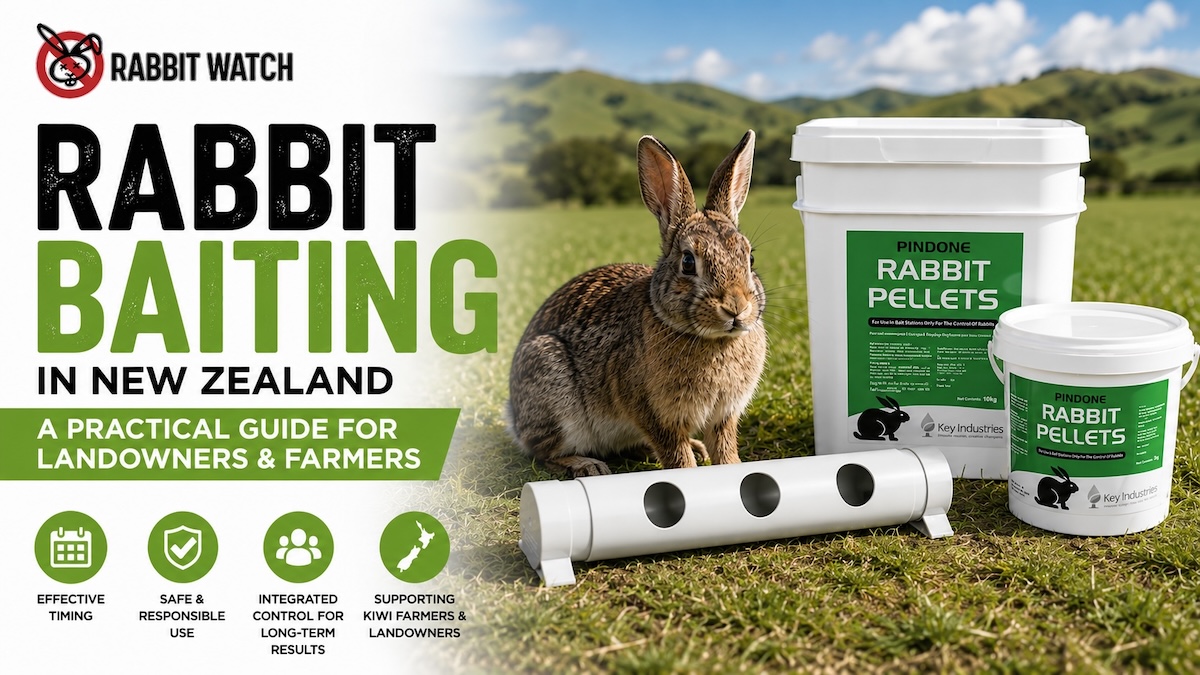
Rabbits remain one of New Zealand’s most damaging pest animals, impacting pasture production, crops, native vegetation, and farm profitability. For many rural properties, lifestyle blocks, and peri-urban areas, baiting with Pindone remains one of the most effective tools for reducing rabbit numbers when used correctly as part of an integrated rabbit control programme.
Why Rabbit Baiting Matters
Even small rabbit populations can rapidly expand and cause significant damage. Rabbits compete directly with livestock for feed, undermine pasture performance, damage young trees and crops, and create erosion through burrowing activity.
Successful rabbit control is rarely achieved with a single method alone. Long-term results come from combining:
- Pindone baiting
- Shooting
- Warren fumigation
- Habitat reduction
- Ongoing monitoring
- Neighbour coordination
Integrated control programmes deliver the best long-term suppression of rabbit populations.
What is Pindone?
Pindone is a first-generation anticoagulant poison commonly used in New Zealand for rabbit control. It works by interfering with blood clotting processes, eventually causing internal haemorrhaging in rabbits that consume a lethal dose.
Unlike fast-acting toxins, Pindone is a multi-feed toxicant, meaning rabbits usually consume bait over several days before mortality occurs.
According to Rabbit Watch NZ:
- Full-grown rabbits require approximately 21 pellets for mortality
- Rabbits generally consume bait over 5–6 days
- Most rabbits die underground
- Bait shyness has not been observed with Pindone baiting
When is the Best Time to Bait Rabbits?
Timing plays a major role in baiting success.
Rabbit baiting is generally most effective when:
- Natural feed is limited
- Pasture quality is low
- Late summer or early autumn conditions reduce alternative food sources
- Rabbit populations are actively feeding across larger areas
Baiting during periods of abundant feed can reduce bait uptake and overall effectiveness.
Types of Pindone Baits Used in New Zealand
Pindone products used for rabbit control commonly include:
Pindone Pellets
Cereal-based pellets dyed green or blue for identification and safety purposes.
Carrot Bait
Diced carrots coated with Pindone concentrate, often used in larger-scale programmes.
Oat Baits
Cooked oat bait can also be prepared using approved Pindone concentrates for broadcast applications.
Bait Stations vs Broadcast Baiting
Bait Stations
Bait stations are commonly used on:
- Lifestyle blocks
- Small rural properties
- Peri-urban areas
- Areas with higher non-target risks
Benefits include:
- Reduced access by pets and non-target animals
- Better bait protection from weather
- Improved control over bait placement
Rabbit Watch NZ notes that rabbits can be neophobic (cautious of new objects), so bait stations may require up to 14 days before full acceptance occurs.
Broadcast Baiting
Broadcast application is often more suitable for:
- Larger farms
- Heavy infestations
- Broadacre rabbit control programmes
Some broadcast applications require Approved User certification depending on the product and application method.
Important Safety Considerations
Pindone baiting must always follow product label instructions and regional regulations.
Key safety practices include:
- Keep bait away from children, pets, and livestock
- Use bait stations where required
- Place warning signage where public access is possible
- Avoid baiting near sensitive wildlife areas
- Monitor non-target risks before beginning a programme
Vitamin K1 is the recognised antidote for accidental off-target poisoning.
Coordinated Rabbit Control Works Best
Rabbit reinvasion is common if neighbouring properties are not controlling rabbits at the same time.
Working together with surrounding landowners can:
- Increase the effective control area
- Reduce reinfestation pressure
- Improve long-term outcomes
- Lower overall control costs
Regional councils across New Zealand strongly encourage coordinated rabbit management programmes.
Common Mistakes That Reduce Baiting Success
Many baiting programmes underperform due to avoidable issues such as:
- Running out of bait during the first week
- Poor timing during periods of abundant feed
- Insufficient bait station numbers
- Lack of follow-up control
- Failing to monitor rabbit activity
- Shooting during active bait uptake periods, which can make rabbits more cautious
Rabbit Watch NZ also recommends assessing rabbit density before beginning treatment using the Modified McLean Scale (MMS).
Long-Term Rabbit Management
While Pindone can significantly reduce rabbit populations, long-term management still requires ongoing maintenance.
After successful baiting, consider follow-up control methods such as:
- Burrow fumigation
- Warren destruction
- Targeted shooting
- Habitat reduction
- Regular property inspections
The most successful rabbit control programmes are proactive rather than reactive.
Final Thoughts
Rabbit baiting remains one of the most practical and effective rabbit control tools available to New Zealand landowners and farmers, particularly when integrated with broader pest management strategies.
Using the correct baiting method, timing applications carefully, and coordinating with neighbours can dramatically improve results and reduce ongoing rabbit pressure on your property.